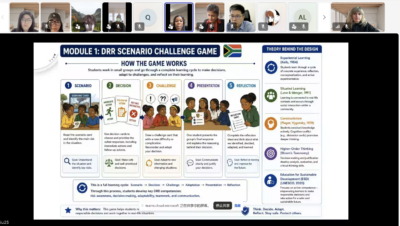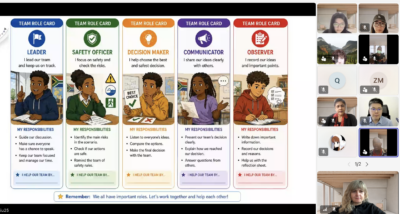

Students of the Department of International Economic Relations and the Department of Economics, Entrepreneurship and Business Administration at Sumy State University have successfully completed their participation in the international educational project “Enhancing Global Competence Through COIL: Integrating Disaster Risk Reduction (DRR) into Curriculum and Informal Learning”. The project was implemented within the Collaborative Online International Learning (COIL) framework in partnership with Xi’an Jiaotong-Liverpool University (China) and Durban University of Technology (South Africa).
The project aimed to enhance students’ global competences through intercultural collaboration, joint project-based learning, and the exploration of contemporary approaches to Disaster Risk Reduction (DRR). Throughout the programme, participants worked in international teams, examined disaster risk management practices from different countries, and developed educational solutions and tools to strengthen community resilience to emergencies and natural hazards.
A distinctive contribution of Sumy State University students was the integration of an economic perspective into the assessment of disaster risk reduction initiatives. Future economists and international economic relations specialists developed a concept for applying Key Performance Indicators (KPIs) to evaluate proposed DRR solutions. This approach enables the assessment not only of the social relevance of disaster prevention measures but also of their economic efficiency, innovation potential, and prospects for practical implementation.
The outcomes of students’ work became an important component of the joint international projects and educational modules developed within the programme. In particular, participants demonstrated how economic indicators can support evidence-based decision-making in the field of disaster risk reduction, contributing to the achievement of the United Nations Sustainable Development Goal 8: Decent Work and Economic Growth.
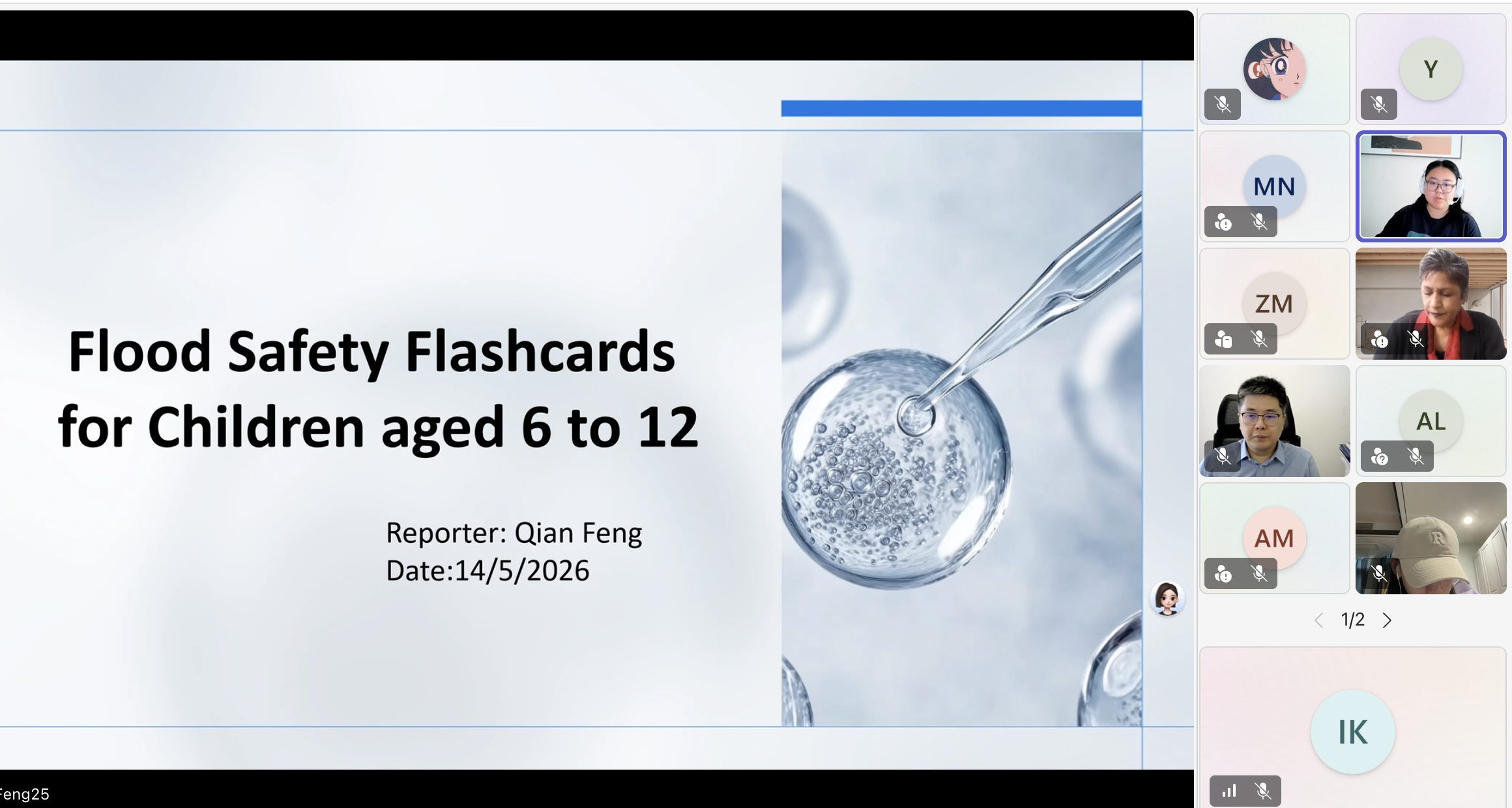
During the programme, students also enhanced their skills in the use of digital and AI-powered tools for research and teamwork, gained experience in curriculum design related to DRR, and further developed competencies in information management and intercultural communication. Another significant outcome was the creation of innovative interactive tools aimed at raising community awareness of disaster risks and fostering a culture of resilience.
For SumDU students, participation in the project provided a particularly valuable opportunity for international engagement during a time of war in Ukraine. Collaboration with peers and academics from China and South Africa enabled them to explore diverse approaches to disaster risk management, broaden their professional perspectives, and gain practical experience working in global teams.
The successful completion of the COIL project once again demonstrated the importance of international academic cooperation in developing the competencies required of modern professionals and strengthening Sumy State University’s integration into the global educational community.